
 中文 (中国)
 Tiếng Việt
 日本語
 한국어

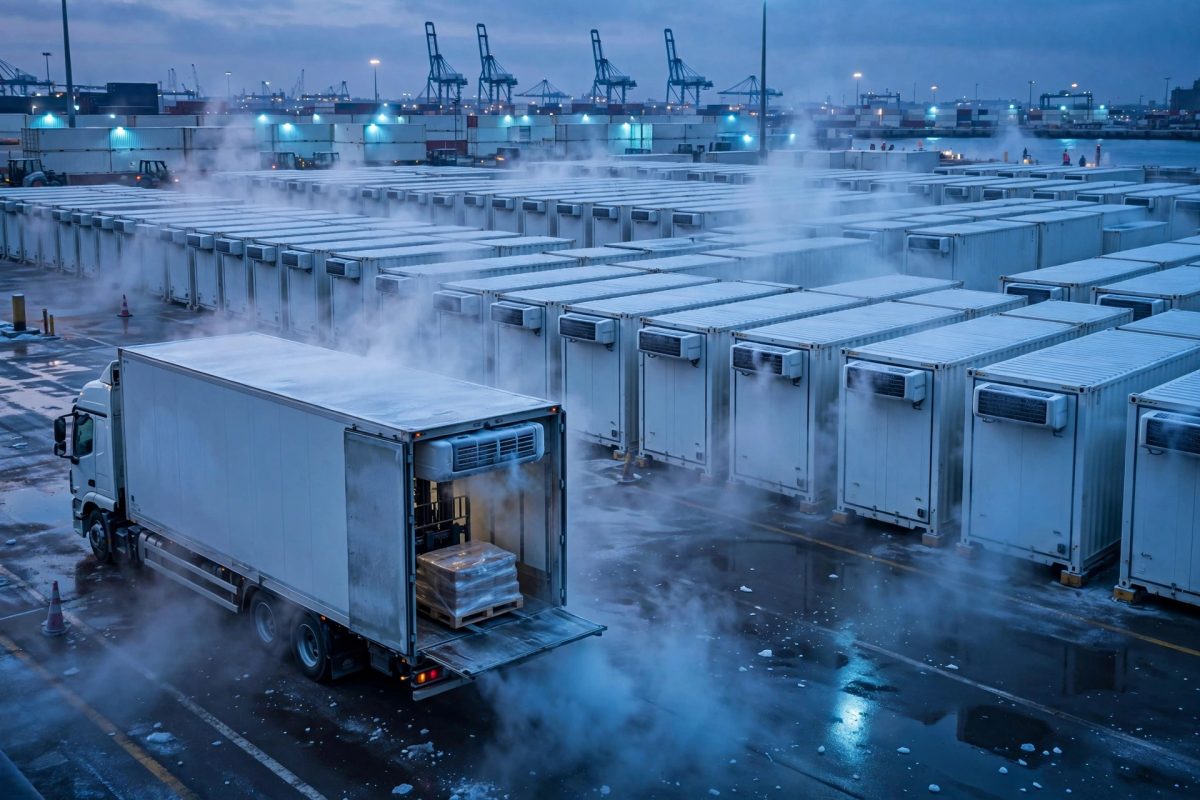
A cold chain is a specialized logistics system that keeps goods at a stable, continuously controlled temperature from the shipper’s warehouse to the receiver’s hands. Unlike ordinary dry cargo, cold-chain goods need only one temperature break — a container left sitting in the sun, a transit warehouse losing power for a few hours — and the entire shipment can lose its commercial value, even though the packaging remains perfectly intact.
Typical cold-chain cargo includes fresh and frozen food, seafood, exported fruit, pharmaceuticals, vaccines and other medical biological products, plus certain chemicals and cosmetics that require cool storage. Their common trait: product quality is directly tied to temperature, and the allowable margin of error is usually very narrow — sometimes only a few degrees Celsius.
The Key Links of a Complete Cold Chain
A cold chain is not a single mode of transport but a sequence of stages, all of which must maintain the same temperature range:
- Cold storage at origin: goods are pre-cooled and packed in insulated packaging before leaving the warehouse.
- Refrigerated transport: reefer trucks, reefer containers for ocean freight, or cold holds on aircraft for high-value, time-sensitive cargo.
- Transit cold storage: hubs for consolidation, sorting and deconsolidation — where the risk of a temperature break is usually highest.
- Customs clearance and quarantine: refrigerated goods are often subject to food hygiene and safety checks and animal/plant quarantine; smooth procedures shorten the time goods spend outside the cold environment.
- Last-mile delivery: urban reefer vehicles or mobile refrigerators delivering to supermarkets, pharmacies and restaurants.
The weakest link determines the quality of the whole chain — which is why end-to-end temperature monitoring with sensors and data loggers has become a standard requirement rather than an option.
Common Temperature Ranges in Cold Chains
- Chilled (around 0–4°C): fresh fruits and vegetables, milk and dairy products, fresh meat, some vaccines.
- Frozen (around -18°C and below): frozen seafood, frozen meat, frozen processed foods.
- Deep frozen (around -25°C and below): some premium seafood lines and specialized biological products.
- Controlled room temperature: many pharmaceuticals only need to be kept within a stable room-temperature range, avoiding sudden heat.
Choosing the wrong temperature range from the start — for example, putting chilled goods into a frozen container — causes irreversible damage, no matter how short the transit time.
Common Risks and How Businesses Can Prevent Them
1. Temperature breaks at transit points
This is the most common cause. Businesses should require their carrier to provide a complete temperature log for every leg, and prioritize providers with real-time alert systems when temperature exceeds the threshold.
2. Incorrect stuffing of the reefer container
A reefer container only cools the circulating air — it cannot “deep chill” goods that have not been pre-cooled. Cargo must be pre-cooled, stowed with gaps left for airflow, and the temperature, humidity and ventilation settings matched to each product type.
3. Prolonged documentation procedures
The longer refrigerated goods wait for customs clearance, the higher the electricity cost of running the container and the greater the spoilage risk. Preparing complete quarantine, food-safety and hygiene documents and declaring accurate HS codes helps release goods faster.
4. Lack of suitable insurance
Ordinary cargo insurance does not necessarily cover losses caused by temperature fluctuations. Businesses should discuss the “cold-chain breakage” clause specifically with their insurer before signing a contract.
When Businesses Should Invest Seriously in Cold Chains
If your business exports agricultural products, seafood, processed foods or distributes pharmaceuticals, a cold chain is no longer an added cost — it is the condition for goods to qualify for demanding markets. Even for domestic distribution, a well-run cold chain reduces loss rates, extends shelf life and creates a clear competitive advantage over rivals that only handle dry cargo.
The most practical starting point: audit the entire temperature journey of your current shipments, identify the riskiest stage, then work with a logistics provider experienced in cold chains to redesign the process — instead of improvising with scattered equipment. A good cold chain is one where temperature is never something you have to guess.
