
 中文 (中国)
 Tiếng Việt
 日本語
 한국어

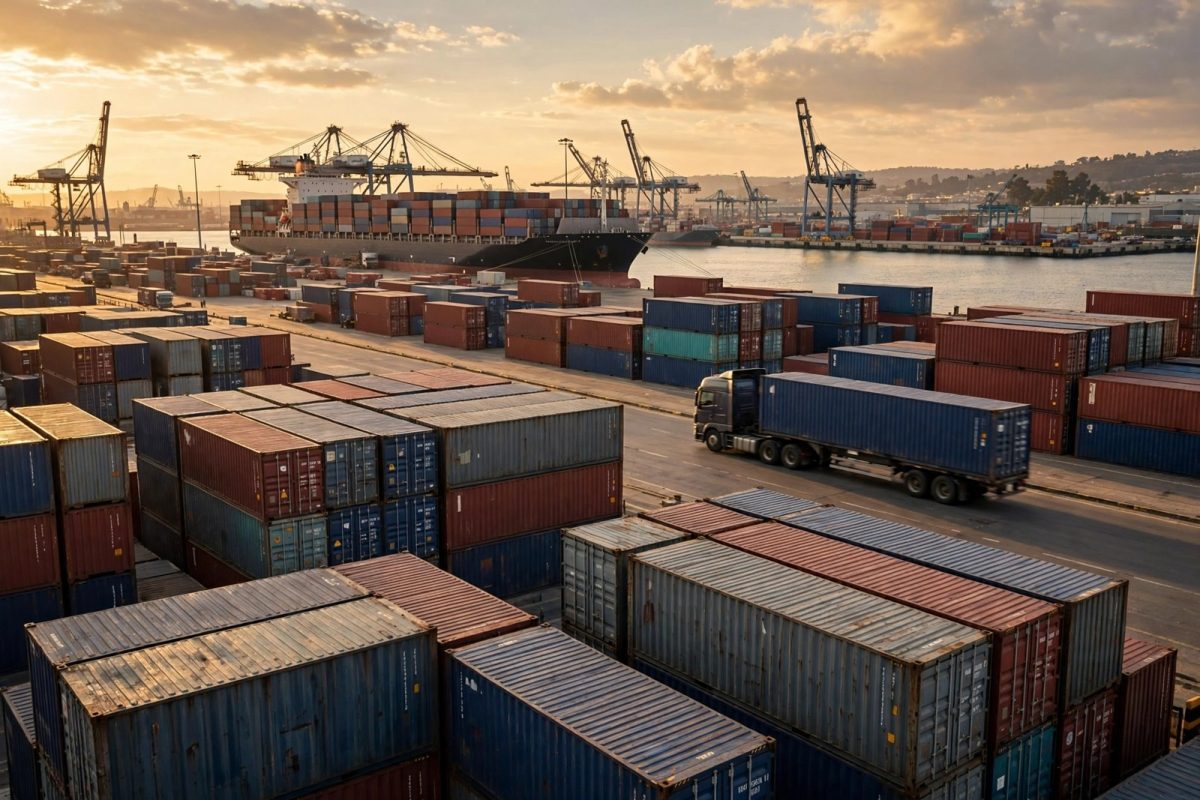
When working with a freight forwarder, importers and exporters often come across two terms: door to door and port to port. Both describe the scope of a transport service, but where the forwarder’s responsibility begins and ends is very different. Choosing the wrong model can push costs up, leave cargo sitting at the port, or create disputes over who is responsible for what. This article explains each model so businesses can choose the option that fits their real needs.
What Is Door to Door?
Door to door means the transport provider picks up the cargo at the seller’s premises — usually a warehouse or factory — and delivers it to the buyer’s premises. The whole journey is arranged as a single all-in service, including:
- Domestic transport from the seller’s warehouse to the port or airport of departure.
- Export customs clearance in the country of origin.
- International transport by sea or by air.
- Import customs clearance in the country of destination.
- Final delivery from the port to the buyer’s warehouse.
With this model, the buyer essentially only needs to receive the goods at their own warehouse. It suits businesses without an in-house logistics team, companies new to import and export, or shipments that must arrive on a tight schedule without coordinating multiple parties.
What Is Port to Port?
Port to port means the carrier’s responsibility covers only the main leg of the journey between two ports (or two airports). The seller arranges delivery to the port of loading and export clearance, while the buyer collects the cargo at the destination port, handles import clearance and organises domestic transport to their warehouse.
The freight rate for port to port is usually lower because the scope of service is narrower. However, the total cost a business actually pays may not be lower, since the first and last legs still have to be arranged separately or handled in-house. This model suits businesses that already have warehousing, domestic transport partners and experience with customs procedures.
Door to Door vs Port to Port: A Comparison
| Criteria | Door to Door | Port to Port |
|---|---|---|
| Scope of service | All-in, from the seller’s warehouse to the buyer’s warehouse | Only the main leg between two ports |
| Forwarder’s responsibility | Across the entire journey | Only during international transport |
| What the business must handle | Very little — mainly preparing cargo and documents | Domestic transport at both ends and customs clearance |
| Cost | One all-in quotation, easy to budget | Lower main freight, but many separate charges add up |
| Risk of extra charges | Lower, as one party is accountable | Higher if the different legs are not well coordinated |
| Best for | Small businesses, newcomers to trade, urgent shipments | Businesses with an established logistics network and experience |
When Should You Choose Door to Door?
Businesses should consider door to door in the following situations:
- New to import and export: no experience with customs procedures or hiring domestic transport at destination.
- LCL shipments or time-sensitive cargo: the forwarder consolidates cargo and coordinates the full schedule, reducing the risk of delays between handover points.
- No agent at the destination port: especially when exporting to a new market, having one party handle the whole journey brings peace of mind.
- A need for accurate budgeting: a single all-in quotation helps avoid hard-to-predict extra charges such as container detention or terminal storage fees.
When Should You Choose Port to Port?
Port to port works best when the business already has logistics capability in place:
- Own warehousing and domestic transport partners: the business can arrange the first and last legs at a better cost than the forwarder’s all-in price.
- Frequent, high-volume shipments: splitting the journey into separate legs allows the business to negotiate better rates with each service provider.
- A desire to control each leg: the business has its own team for customs clearance and wants to manage schedules and routes directly.
- Cargo with special requirements: some goods need specialised vehicles or storage that the business already has trusted partners for.
Points to Note When Choosing
Whichever model is chosen, businesses should keep a few points in mind:
- Read the quotation carefully: check exactly which charges are included — freight, documentation fees, customs fees and final delivery — so that quotations are compared on the same basis.
- Agree the right Incoterms: door to door or port to port should go together with suitable Incoterms, so that responsibilities and the point at which risk transfers between seller and buyer are clearly defined.
- Check the container free time: if cargo stays at the port beyond the free period, demurrage and detention charges can build up quickly.
- Choose a reliable forwarder: with door to door in particular, the forwarder’s coordination capability largely determines the quality of service.
Conclusion
Neither model is better in every case. Door to door is convenient and easy to manage, while port to port is flexible and can save costs when the business already has logistics capability. Businesses should decide based on their own experience, the nature of each shipment and the destination market, rather than comparing only the main-leg freight rate. When in doubt, discussing the shipment in advance with an experienced forwarder will help identify the best option for each specific consignment.
