
 中文 (中国)
 Tiếng Việt
 日本語
 한국어

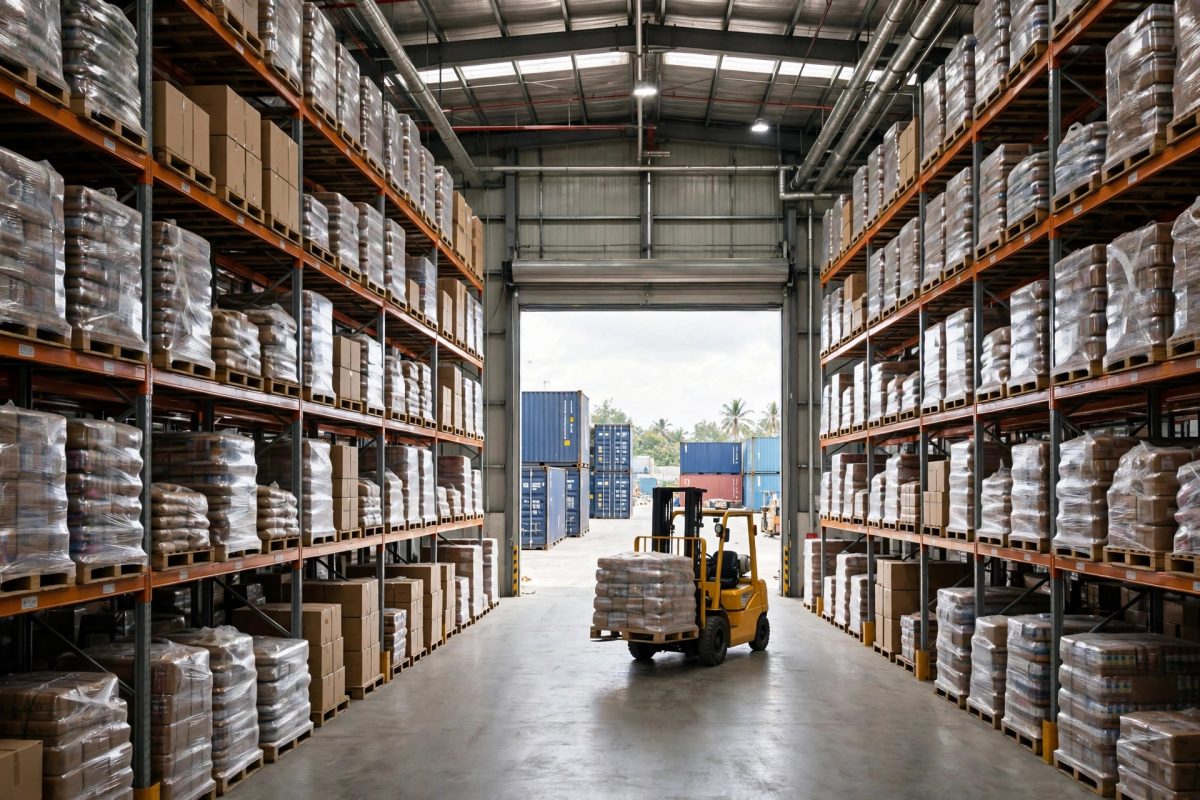
In import–export operations, cargo arriving at a port is not always ready to clear customs and move straight to a company’s own warehouse. Sometimes the importer does not want to pay duty immediately, has not yet confirmed a buyer, or needs temporary storage before re-exporting the goods to a third country. This is exactly where a bonded warehouse becomes valuable. This article explains what a bonded warehouse is, what operations are allowed inside it, and when a business should consider using one.
What is a bonded warehouse?
A bonded warehouse is a warehouse or yard established within the territory of Vietnam, licensed by the customs authority and placed under customs supervision. Goods stored in a bonded warehouse are treated as not yet imported into the domestic market: the importer does not have to pay import duty or value-added tax until the goods are actually released for domestic circulation.
In other words, a bonded warehouse works as a “buffer zone” between the port and the market. Goods arriving from abroad can be stored there for a defined period while the business decides the next step: selling to a domestic buyer, transferring the goods to another facility, or exporting them onward to another country without completing an import into Vietnam.
What can be done with goods in a bonded warehouse?
While the goods are in storage, the owner or an authorised representative may carry out a number of handling activities to preserve the cargo and prepare it for distribution, under the supervision of customs and the warehouse operator, including:
- Reinforcing packaging, sorting and rearranging the goods;
- Taking samples for sales offers or quality inspection;
- Transferring ownership of the goods to another party;
- Splitting and repacking the shipment before dispatch;
- Maintenance and preservation, especially for goods requiring specific storage conditions.
However, goods in a bonded warehouse may not be manufactured or processed in a way that changes their nature, and they cannot be sold directly at retail into the domestic market. To release goods for domestic circulation, the importer must complete import procedures and pay all duties and taxes, just like a regular import shipment at the time the goods leave the warehouse.
When should a business use a bonded warehouse?
When you want to defer import duty payment
This is the clearest benefit. Instead of paying duty the moment the cargo reaches the port, the business only pays when the goods are actually released for domestic sale. This frees up cash flow for other business activities, which matters greatly for high-value shipments or seasonal imports.
When transhipping goods to a third country
International trading companies often bring goods into Vietnam before re-exporting them to another market. Storing the goods in a bonded warehouse skips the domestic import step entirely: no import duty arises, procedures are simpler, and the goods only need export clearance when they leave the warehouse.
When the sales plan is not yet finalised
Cargo arriving earlier than expected, a buyer changing the delivery schedule, or a business wanting to test the market before committing to a formal import — all of these situations suit a bonded warehouse. The goods are stored safely under customs supervision while the company weighs its best option.
When consolidating or splitting cargo for multiple buyers
A large shipment can be held in a bonded warehouse, then gradually split and shipped out to several buyers in different countries, or partially imported into the domestic market. This is far more flexible than clearing the entire shipment through customs from the start.
Important notes when using a bonded warehouse
- Storage time is limited: goods may only remain in a bonded warehouse for a maximum period prescribed by customs law (generally no more than 12 months from the date of entry), so businesses need a clear plan before the deadline.
- Not all goods qualify: prohibited imports and exports, and goods under special control, are restricted or not allowed into bonded warehouses.
- Storage costs accrue over time: deferring duty does not mean free storage — warehousing, handling and preservation fees are charged based on actual time, and must be weighed against the cash-flow benefit.
- Documents must match the actual cargo: goods in the warehouse are subject to customs inspection and supervision; any discrepancy in quantity or type can cause problems when the goods are released.
Conclusion
A bonded warehouse is a practical tool that gives importers and exporters flexibility in cash flow, control over distribution plans, and simpler international transhipment. To use it effectively, businesses should understand the storage time limits, the categories of goods allowed, and prepare complete documentation from the start. If your company is considering a bonded warehouse option for an upcoming shipment, the VICA Logistics team is ready to advise on the right procedure for each specific case.
