
 中文 (中国)
 Tiếng Việt
 日本語
 한국어

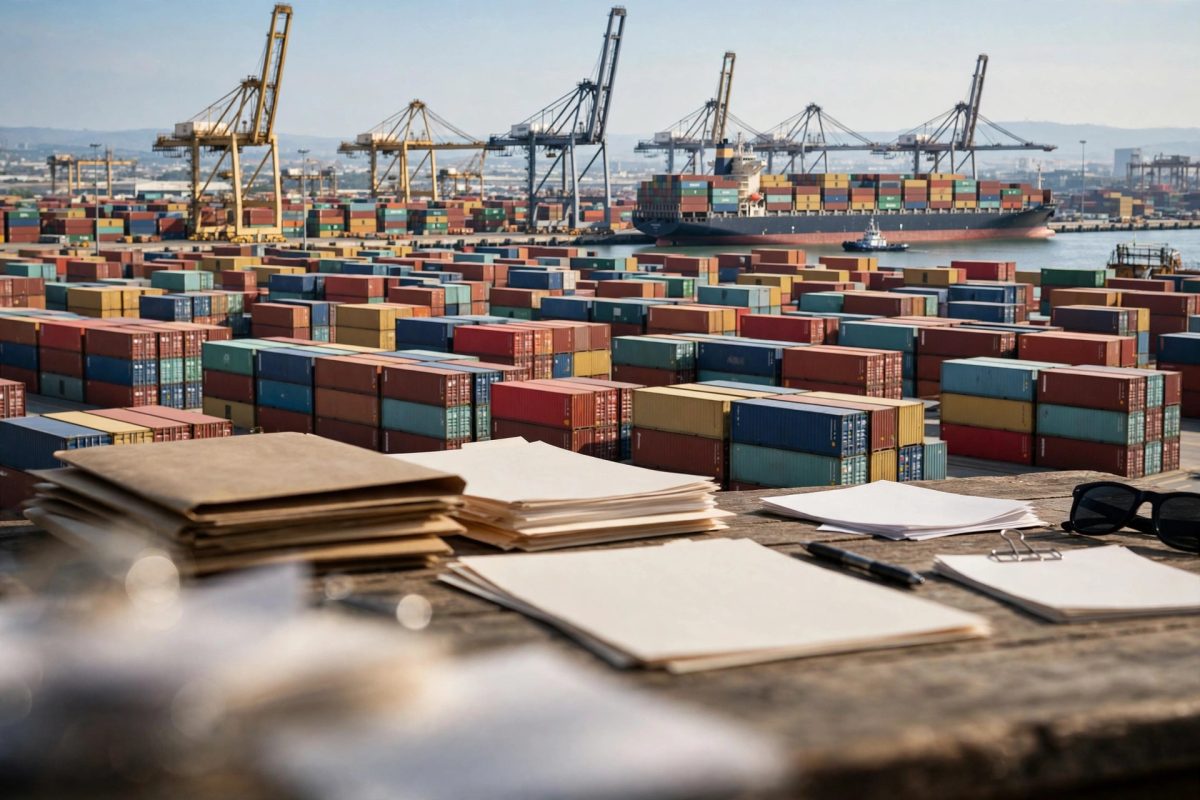
The Certificate of Origin (C/O) is one of the most important documents in international trade, determining whether a business qualifies for preferential tariffs under free trade agreements (FTAs). Each FTA has its own C/O form, and choosing the wrong form — or declaring information inaccurately — can mean a shipment misses out on tariff preferences or is even rejected by customs in the importing country. Here are the 4 most common C/O forms that Vietnamese import-export businesses encounter.
Form E — C/O under the ASEAN–China FTA (ACFTA)
Form E is issued for goods traded between ASEAN countries and China, under the ASEAN–China Free Trade Agreement (ACFTA).
- Scope: goods exported from Vietnam to China and goods imported from China into Vietnam, when the business wants to benefit from preferential import tariffs.
- Origin criteria: most commonly a minimum regional value content (RVC) of 40% or the change-in-tariff-classification (CTC) criterion, depending on the specific HS code.
- Note: only goods that fully meet the rules of origin can be issued a Form E. Businesses should keep complete records of material declarations, domestic purchase invoices, and production documents to prove origin during post-clearance audits.
Form D — C/O for intra-ASEAN trade (ATIGA)
Form D applies to goods traded among ASEAN member states, under the ASEAN Trade in Goods Agreement (ATIGA).
- This is the most widely used C/O form in intra-bloc trade, helping Vietnamese goods exported to Thailand, Malaysia, Indonesia, the Philippines, Singapore, and others enjoy special preferential tariffs.
- The origin criteria are similar to Form E: minimum 40% RVC or CTC by product line.
- Because intra-ASEAN trade is highly active, businesses should get familiar with the Form D application process from their very first shipment to avoid missing out on tariff benefits.
Form AK — C/O under the ASEAN–Korea FTA (AKFTA)
Form AK applies to goods traded between ASEAN and South Korea, under the ASEAN–Korea Free Trade Agreement (AKFTA).
- Scope: Vietnamese goods exported to South Korea and Korean goods imported into Vietnam.
- Origin criteria: minimum 40% RVC or CTC, similar to the two forms above; some products have their own Product Specific Rules (PSR) that must be checked carefully.
- South Korea is a major trading partner of Vietnam, so Form AK is especially important for businesses exporting agricultural products, seafood, textiles, and electronic components.
Form AJ — C/O under the ASEAN–Japan CEP (AJCEP)
Form AJ applies to goods traded between ASEAN and Japan, under the ASEAN–Japan Comprehensive Economic Partnership (AJCEP).
- Scope: Vietnamese goods exported to Japan and vice versa.
- Besides AJCEP, Vietnam and Japan also have the bilateral VJEPA — businesses can compare to choose the C/O form (AJ or VJ) that offers the better preferential tariff for each HS code, but each shipment may use only one form.
- Origin criteria: minimum 40% RVC or CTC, with PSR for certain product groups.
- For the Japanese market, importing-country customs inspect origin documents quite strictly, so information on the C/O must match the commercial invoice and bill of lading exactly.
Key notes when applying for a C/O
To make the C/O application process go smoothly, businesses should remember:
- Register the trader profile with the C/O issuing authority (VCCI or the local Department of Industry and Trade) before the first shipment.
- Prepare material declarations, consumption norms, and production processes to prove the goods meet the rules of origin.
- Apply for the C/O before or at the time of shipment; issuance after the shipment date (issued retroactively) is accepted under some agreements but involves more complex procedures.
- All information on the C/O — goods description, quantity, value, HS code, vessel/flight name — must match the commercial invoice, bill of lading, and customs declaration.
- Some ASEAN countries have implemented electronic C/O (e-C/O) and self-certification of origin; businesses should stay updated to shorten processing time.
Choosing the right C/O form helps businesses save significantly on import duties and avoid the risk of having tariff preferences rejected in the importing country. If you are unsure which form fits or what the rules of origin are for your products, consult your freight forwarder or a trade compliance specialist before signing the contract and shipping the goods.
