
 中文 (中国)
 Tiếng Việt
 日本語
 한국어

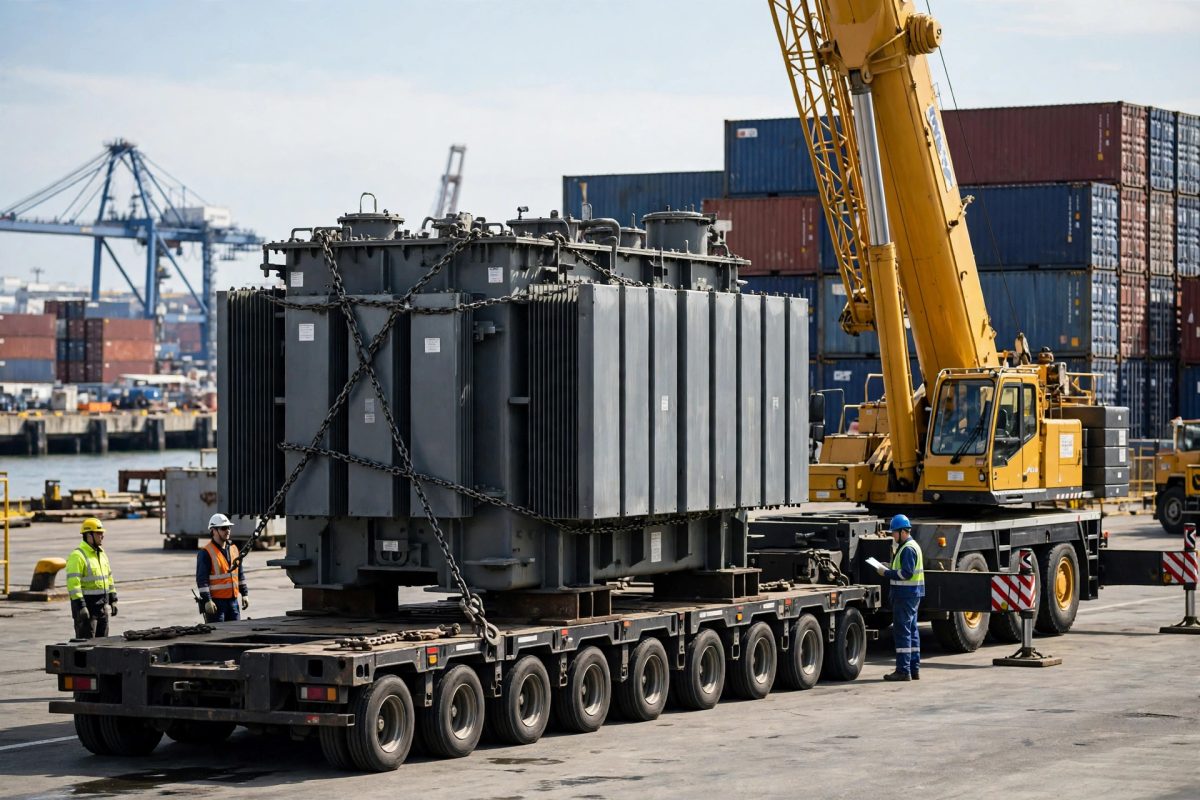
Not every shipment fits into a standard container or an ordinary truck. Industrial machinery, electrical equipment, steel structures, turbines, transformers and other bulky items often exceed the dimensions or the permitted load of standard vehicles. These shipments are known as oversized and overweight cargo, and moving them requires a dedicated plan, specialist equipment and special permits. Careful preparation from the outset helps businesses avoid delays, cargo damage and unforeseen extra costs.
What is oversized and overweight cargo?
Oversized cargo is cargo with one or more dimensions — length, width or height — that exceed the internal dimensions of a standard container or an ordinary truck bed. Overweight cargo is cargo whose total weight exceeds the permitted load of the vehicle or of the planned route. A single item can be both oversized and overweight, for example a transformer weighing dozens of tonnes and too tall for a container door. Identifying the cargo type correctly as soon as the information arrives is the first step, because it determines the vehicle, the route and the type of permit required.
Specialist vehicles and equipment
For road transport, oversized and overweight cargo is usually carried on low-bed trailers, extendable trailers or specialist multi-axle vehicles that distribute the load. For ocean transport, cargo is loaded onto flat rack or open top containers, or carried as breakbulk on specialist vessels when its dimensions exceed even special containers. Heavy-duty cranes, high-capacity forklifts and professional lashing equipment are essential at both the loading and the discharge points. Businesses need to provide complete technical details of each item — dimensions in every direction, weight, centre of gravity and lifting points — so the carrier can choose the right vehicle and securing plan.
Route survey and permits
This is the most time-consuming stage and also the one businesses most often underestimate. The transport route must be surveyed in advance: bridge clearance heights, bridge load limits, turning radius, gradients, overhead obstacles such as power lines and road signs, and narrow stretches through residential areas. Where cargo exceeds the permitted limits of a route, the carrier must apply for a special transport permit from the competent authority, and in many cases an escort vehicle or pilot car is required. Permit processing can take several working days, so businesses should start the procedure as soon as the order is confirmed, rather than waiting until shortly before delivery.
Packing, lashing and insurance
Oversized and overweight cargo is exposed to much greater vibration, tilting and inertial forces during transport than ordinary cargo. Packing must take load-bearing points into account, with wooden or steel frames reinforced at the lifting positions, and suitable moisture-proof and shock-resistant materials. Lashing must follow a calculated plan: chains, steel straps or wire ropes at the correct anchor points, avoiding deformation of the cargo structure. In addition, businesses should insure the cargo for the full journey, because each item is usually of very high value and damage brings considerable repair or replacement costs.
Tips to help businesses stay in control
- Provide accurate and complete cargo details from the start: dimensions, weight, centre of gravity, lifting points and real photographs of the item.
- Allow time for route surveys and permit applications — this is the stage most likely to delay the schedule.
- Check access in advance at both loading and discharge points: crane working space, gate width and warehouse floor load capacity.
- Agree clearly on responsibilities between the parties: who handles permits, who provides escort vehicles, and who bears the extra cost if the route must change.
- Choose a carrier with real hands-on experience in oversized and overweight cargo, not just the lowest quotation.
- Prepare contingency plans for bad weather and for road sections closed to traffic at certain hours.
Moving oversized and overweight cargo is not simply a matter of using a bigger truck. It is a small logistics project in itself, in which surveys, permits, specialist equipment and coordination between several parties decide the outcome. The earlier a business prepares and the more complete the information it provides, the better the chance that the shipment arrives safely, on time and within the planned budget.
