
 中文 (中国)
 Tiếng Việt
 日本語
 한국어

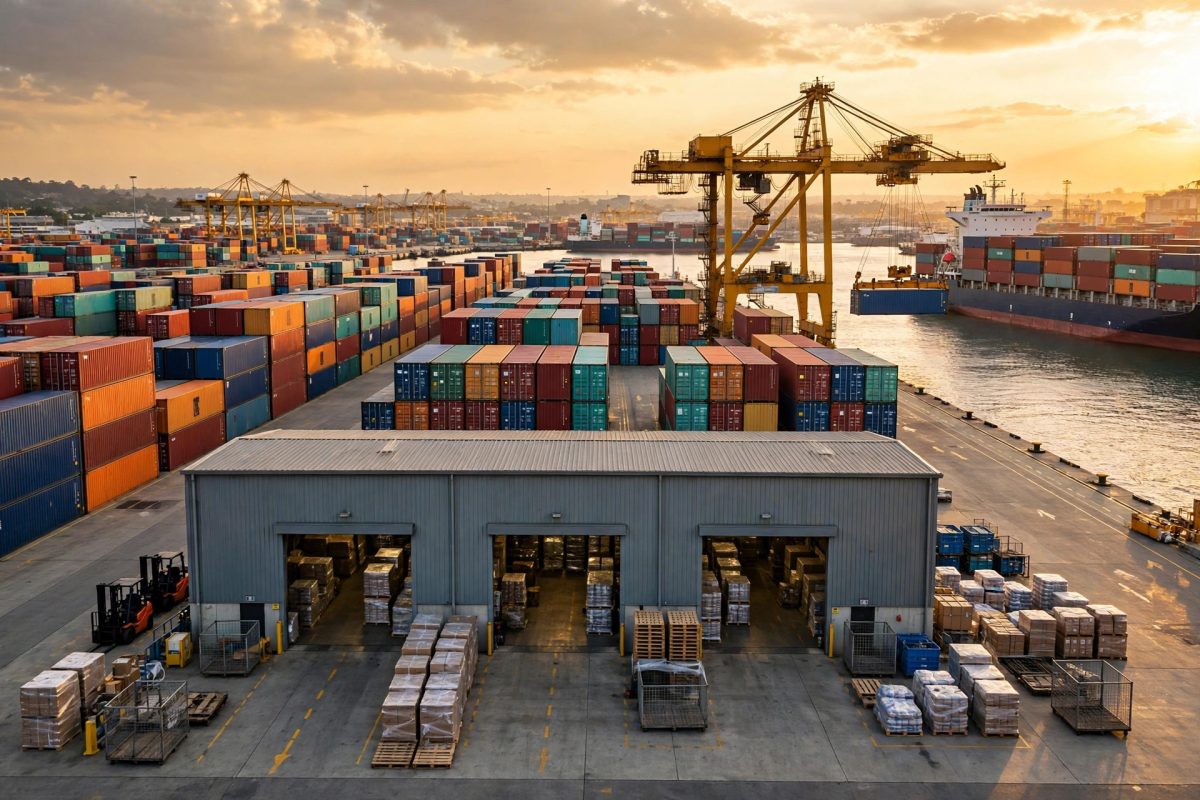
When receiving an ocean freight quotation, many import and export businesses are surprised to find that, in addition to the ocean freight itself, there are several extra charges — the most common being THC and CFS. What are these two charges, who pays them, and how can they be controlled? This article explains them so businesses can avoid unexpected costs.
What Is THC?
THC (Terminal Handling Charge) is the handling fee at the port, collected by the shipping line or the port operator to cover the cost of terminal operations: receiving containers, loading and unloading vessels, moving containers within the yard, and handling related documentation.
THC is usually charged per container, depending on its size (20 feet or 40 feet) and the port of loading or discharge. For exports, THC is normally paid by the shipper at the port of loading; for imports, THC at the port of discharge is normally paid by the consignee, unless the parties agree otherwise in the sales contract.
It is important to note that THC levels differ between ports and may change from time to time. Businesses should ask their freight provider to list THC separately in the quotation, rather than looking only at the ocean freight figure.
What Is CFS?
CFS (Container Freight Station) is the handling charge at a less-than-container-load warehouse, applied when cargo does not fill a full container (LCL — Less than Container Load). In this case, cargo from several shippers is consolidated into one container at the CFS warehouse, and the CFS charge covers receiving, sorting, packing, handling and storing the loose cargo.
Unlike THC — a charge for handling containers at the port — CFS is a charge for handling loose cargo inside the warehouse. It is usually calculated based on the volume or weight of the shipment (measured in CBM — cubic metres), and is paid by the shipper or the consignee depending on the agreed delivery terms.
How Do THC and CFS Differ?
- Scope: THC applies to both full container loads (FCL) and LCL cargo, because every container passes through the port. CFS applies only to LCL cargo.
- Charging basis: THC is charged per container; CFS is charged per volume or weight of the cargo.
- Where it arises: THC arises at the port terminal; CFS arises at the container freight station warehouse.
- Who collects it: THC is collected by the shipping line or port operator; CFS is collected by the CFS warehouse operator or the forwarder.
For an LCL shipment, a business may have to pay both charges at the same time. This should be kept in mind when comparing quotations from different carriers, as a lower-looking quote may simply omit some of these charges.
What Should Businesses Watch Out For?
1. Ask for a detailed, transparent quotation
A good quotation should itemise each charge: ocean freight, THC, CFS (if applicable), documentation fees, inland transport and any other surcharges. Businesses should compare the total door-to-door cost, not just the ocean freight alone.
2. Clarify who pays what under the Incoterms
The delivery terms in the contract (for example FOB, CIF or EXW) determine which party bears the THC at the port of loading and the port of discharge. Before signing a contract, the parties should agree clearly on who pays each charge to avoid later disputes.
3. Check surcharges and conditions
Some ports or shipping lines may apply additional surcharges during peak season or when cargo requires special handling. Businesses should ask in advance about conditions that could generate extra costs.
4. Choose a reliable freight partner
A professional forwarder will explain the freight cost structure clearly, warn in advance about charges that may arise, and help businesses optimise logistics costs for each specific shipping route.
Conclusion
THC and CFS are two basic charges in ocean freight, tied to container handling at the port and loose-cargo handling at the warehouse. Understanding the nature of each charge, when it applies and who is responsible for paying it helps businesses plan their costs proactively, negotiate contracts and choose the right transport partner. As logistics costs attract ever more attention, transparency in freight charges is what allows businesses to keep their import and export budgets under control.
